July 24, 2026
Summary
As Physical AI moves from controlled environments into applications, machines need more than visual recognition. Thermal imaging adds temperature, heat patterns and energy-dissipation data to the sensor-fusion stack, helping systems understand not only what they see, but also what is physically happening.
Physical AI is becoming an important development area for robotics, automation, smart appliances, predictive maintenance and safety monitoring. These systems are designed to operate in the physical world, where conditions are rarely perfect and where decisions often depend on more than a visual image.
RGB cameras can show what an object looks like. LiDAR, radar and depth sensors can help determine where it is. Acoustic sensors can detect sound patterns. But in many applications, another question is just as important: What is the thermal state of the object, machine or environment? That is where thermal imaging becomes highly relevant.
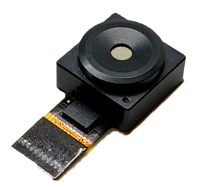
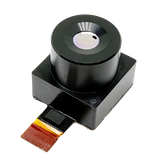
Meridian Innovation’s CMOS-based LWIR thermal sensors are designed to provide thermal data in the 8–14 µm wavelength range. This makes it possible to detect temperature differences, heat distribution and thermal behaviour, without depending on visible light.
For engineers, this opens interesting possibilities. A system can detect whether a component is overheating, whether a motor or power stage is behaving abnormally, whether a person is present, or whether a process is creating unexpected heat patterns.
In other words, thermal sensing does not only add another image. It adds physical-state information.
Physical AI systems must often work in environments with changing light, dust, motion, reflections or limited visibility. In these conditions, relying only on visual data can create blind spots.
Thermal imaging can support applications such as:
• Robotics and human-machine interaction
• Predictive maintenance
• Smart appliances
• HVAC systems
• Industrial safety monitoring
• Elderly care and presence detection
• Battery and power-electronics monitoring
• Building automation
The advantage is not just detection. The advantage is context.
A robot may see an object. A thermal sensor can help determine whether that object is hot, cold, occupied, active, inactive or moving toward a failure condition. That is useful information, especially when nobody wants the first warning sign to be smoke.
From an embedded design perspective, thermal imaging can also be attractive because it does not always require the same data bandwidth as high-resolution RGB video. Lower-resolution thermal arrays can provide valuable physical information while keeping power consumption, data rates and processing requirements under control.
Depending on the sensor and application, thermal data can be processed by a microcontroller for functions such as hotspot detection, threshold monitoring, object isolation or basic event detection. For more advanced systems, thermal data can be combined with RGB, radar, LiDAR or AI processing to create a more complete sensor-fusion architecture.
This makes thermal sensing especially relevant for edge applications where power budget, available compute, interface choice and system reliability all matter.
When integrating thermal sensing into a product, engineers should look beyond the sensor image itself. Important design questions include:
• What thermal resolution is required for the application?
• Is the goal detection, measurement, classification or sensor fusion?
• Which interface is most suitable: I²C, SPI or another option?
• What are the power-consumption limits?
• Does the system need continuous operation or duty-cycled sensing?
• How will the thermal data be calibrated and interpreted?
• Will the sensor operate in a controlled indoor environment or a more demanding industrial setting?
• Does the design need local processing, cloud processing or a combination of both?
These questions determine whether thermal sensing becomes a useful system feature or just another sensor added because the block diagram looked a little empty.
At TOP-electronics, we support engineers in selecting and integrating sensor technologies that match the real design constraints of the application. This includes power consumption, interface compatibility, processing requirements, mechanical integration, availability and long-term reliability.
Thermal sensing can be a valuable addition to the Physical AI sensor stack, especially when systems need to understand physical conditions, not only visual scenes.
Because in real applications, it is not enough for a system to recognize what is in front of it.
It also needs to understand what is happening.