June 29, 2026
When a design needs to detect information beyond what visible light can show, thermal imaging can add valuable context. Meridian Innovation develops advanced CMOS thermal imaging solutions based on its patented SenXor CMOS Thermal Imaging technology, enabling LWIR thermal imaging products for consumer and commercial applications.
Their thermal camera modules are designed for applications that need compact, low-power thermal sensing, including monitoring beyond the visual spectrum, manufacturing and construction, power distribution, HVAC systems, surveillance, baby and elderly care, home appliances, smart lighting and IoT sensing.
For engineers, the key value is not only the sensor module itself. Meridian also provides Thermal Image Processor support, such as the MI48 family, which handles raw sensor data processing, per-pixel calibration, and bad pixel correction, helping reduce the processing burden on the host MCU or SoC.
Relevant markets include Industrial, Healthcare, Lifestyle & Consumer, Mobility and connected IoT systems. Agriculture and renewable energy are also relevant markets where thermal monitoring adds value to condition monitoring, safety or process insight.
SenXor technology explained
SenXor is Meridian Innovation’s patented CMOS Thermal Imaging technology for long-wave infrared, or LWIR, sensing.
In practical terms, SenXor enables compact thermal camera modules that detect radiation in the 8 to 14 μm LWIR band, which is commonly used for thermal imaging because objects at everyday temperatures emit energy in this range.
The idea is straightforward: instead of relying on visible light, the sensor measures thermal radiation. This allows a system to “see” heat patterns, temperature differences and thermal events that are not visible to a standard RGB camera.
For design teams, CMOS compatibility matters because it supports scalability, compact integration, and embedded suitability. CMOS manufacturing is widely established and supports volume production. The MI0801 chip-scale package measures 6.7 x 7.2 x 1.1 mm, supporting compact thermal sensing designs. Modules such as the MI0802 and MI1602 also support embedded integration with a 3.3 V supply, SPI interface, and low-power operation.
This is important because many thermal imaging technologies have historically been too expensive, too large or too complex for mainstream embedded products. SenXor is Meridian’s answer to that design barrier.
Wafer-level vacuum packaging
Thermal infrared detectors require careful packaging because the sensing element must respond to incident infrared energy without excessive thermal losses. Meridian’s SenXor-based devices use wafer-level vacuum packaging, or WLVP. These low-cost thermal imaging sensors are offered in a proprietary wafer-level vacuum package.
The sensor structure is built at wafer level, supporting repeatability and manufacturability. This makes the technology suitable for mass production in LWIR products.
The vacuum cavity helps the thermal detector operate efficiently. For example, the MI0801 chip consists of two CMOS wafers bonded together with a vacuum cavity between them. The base wafer contains the circuit and sensor elements, while the cap wafer transfers LWIR radiation and maintains the vacuum environment required for operation of the LWIR detectors.
The package also supports compact camera module designs, including compact module housings and integrated optics across the Cougar, Panther, and Cheetah module families.
SenXor is not just a pixel concept. The packaging is central to making the thermal detector practical for embedded products.
From thermal radiation to usable temperature data
A SenXor-based module does not simply output a “picture” in the same way as an RGB camera. The raw thermal array data first needs to be corrected and processed before the host system can use it reliably.
This is done with a Thermal Image Processor, or TIP, such as the MI48AX for the MI0802 and the MI48EX for the MI1602. The TIP processes the raw sensor data, performs per-pixel calibration and bad pixel correction, and helps convert the raw camera data into usable temperature information.
In a typical signal chain, LWIR radiation enters through the lens and package window. The SenXor thermal array then converts the incident thermal energy into pixel-level sensor signals. These signals are processed by the Thermal Image Processor, where low-level thermal processing is handled. Calibration, bad pixel correction, and filtering are applied before the data is passed on to the host system.
The host MCU, SoC, or processor then receives usable temperature and image data through interfaces such as SPI or I²C, depending on the product setup.
This system-level approach is useful because it reduces the processing burden on the host. For design-in, this can simplify firmware development and shorten the path from evaluation kit to embedded integration.
Shutterless, low-power thermal imaging
The SenXor-based MI0801 is designed for easy calibration, low power consumption, and shutterless operation. This is important for embedded products because a mechanical shutter can add cost, increase size, create acoustic or mechanical artifacts, affect reliability, and add power and timing complexity.
For applications such as smart appliances, occupancy detection, safety monitoring, HVAC, industrial condition monitoring, and portable devices, shutterless and low-power operation can make thermal imaging more practical and easier to integrate.
For engineers, the value is in the complete sensing chain. Meridian camera modules can be combined with the MI48 Thermal Image Processor family, which processes raw thermal array data and supports per-pixel calibration, bad pixel correction and conversion into temperature information. This reduces the processing burden on the host MCU or SoC and helps accelerate design-in.
Typical applications include industrial monitoring, HVAC systems, power distribution, surveillance, smart appliances, patient monitoring concepts, baby and elderly care, smart lighting and IoT sensing.
Product-level scalability
Meridian offers modules such as MI0802 Cougar at 80 x 62 resolution and MI1602 Panther at 160 x 120 resolution, giving engineers different integration options depending on required detail, power budget and field of view.
Product information: MI0802 Cougar
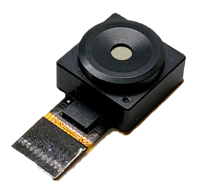
The MI0802 Cougar is a compact LWIR thermal imaging camera module powered by Meridian Innovation’s SenXor technology. It features an 80 x 62 thermal array, equal to 4,960 pixels, and is designed for embedded systems that need thermal video or still-image data in a small form factor.
| Resolution | Wavelength | Operating temperature | Maximum scene temperature range | Interface | Power supply | Power consumption | Field-of-view options |
| 80 x 62 thermal pixels | 8 to 14 μm LWIR | 8 to 14 μm LWIR | -40 to 400 °C | SPI, with MI48 Thermal Image Processor support | 3.3 V | less than 50 mW | 56/45/34, 122/90/67 or 135/105/79 degrees, depending on module version |
The MI0802 is a practical option when the design needs a balance between compact integration, thermal awareness and low power consumption. It can support use cases such as HVAC monitoring, smart lighting, surveillance, home appliances, power distribution monitoring and smart/AI sensing.
Productinformation: MI1602 Panther
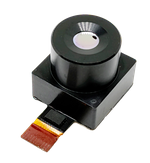
The MI1602 Panther is an LWIR thermal imaging camera module featuring a 160 x 120 focal plane array, equal to 19,200 pixels. It is designed for applications that need more thermal detail while keeping integration practical for embedded platforms.
| Resolution | Wavelength | Operating temperature | Maximum scene temperature range | Interface | Power supply | Power consumption | Field-of-view (FOV) options |
| 160 x 120 thermal pixels | 8 to 14 μm LWIR | 8 to 14 μm LWIR | -20 to 85 °C (TBC) | SPI | 3.3 V | less than 78 mW | 110/88/66 or 56/45/34 degrees, depending on module version |
The MI1602 works with the MI48EX Thermal Image Processor, which handles per-pixel calibration, bad pixel correction and conversion of raw camera data to temperature. The SDK provides filters and image processing support on the host for temperature information and thermal image output.
MI1602 is suited to designs that need higher thermal image detail, for example in industrial monitoring, power distribution, HVAC, surveillance, healthcare monitoring concepts and smart sensing platforms.
Back